Showing posts with label Love. Show all posts

Thursday, September 8, 2016

‘Let your speech always be gracious, seasoned with salt’

elder in
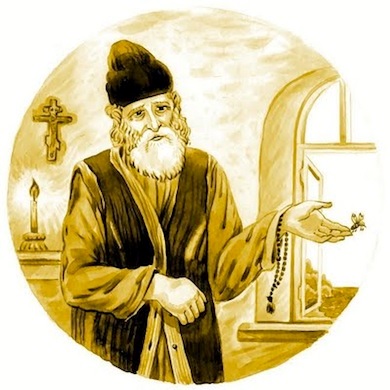
It was February, 1988. Quite cold in Karyes [the capital of the Holy Mountain]. It’s at quite a high elevation and it’s damp which makes things more difficult. But the weather was dry that day. There was a bit of a breeze and if you were warmly dressed it was quite enjoyable. It was late afternoon and the sun had just dropped behind the hill. I was walking along a path with Father Païsios, and on the way we met up with Fr. Kallinikos from the Skete of Koutloumousi.
We arrived at the little wooden bridge. There were walnut tress all around, with just bare branches.
‘Who’s gone and brought mandarins?’, asked Father Païsios in surprise.
Much further on, about sixty meters away, there was the gate to his yard and something showing at the bottom, which might have been orange in colour. From that distance it wasn’t possible to say more.
We soon arrived and, indeed, we saw a big plastic bag, orange in colour, full of mandarins. How on earth had he seen them? How did he know they were mandarins and not oranges? Given that the bag was orange it could have contained anything, apples, for example.
‘I really like mandarins’, he said, pretending to be greedy. ‘I’ll keep three for myself… No, better make it five… No, now I’ve got the chance I’ll take seven’, he said with a big smile and stopped at seven.
‘Take the rest across to Elder Iosif, Father Kallinikos’.
Father Kallinikos took his blessing and left. Fr. Païsios and I went into his little house. We sat in a cell and he asked me to read some manuscript texts of his.
About twenty minutes had passed when somebody knocked at the gate, wanting to see him.
‘Should I answer the door, Elder?’, I asked.
‘Better not. If they’re curious, they’ll leave. If they really need to see me, they won’t’.
We continued reading, and in a few minutes the knock came again.
‘Now what do we do, Elder?’
Instead of curtains, there was a piece of sheet over his window.
‘Take a peek, without them seeing you and tell me how many there are’.
‘I can’t tell, because I can’t see them’
‘Can’t you even add up? What were you doing all those years in America?. We’ll wait and they’ll knock again.
Sure enough, after a while they knocked again.
‘Now I’ll see if I can count them. I may not have finished Primary School, but I’ll see what I can do’.
He got up and opened the door.
‘What’s the matter, lads? Look at the time. What have you come for?’
‘Father we want to see you for a little. Can we?’
‘Certainly, you can see me, but what will we find to offer you? How many are you? Let me count. Seven. Let’s see what there is in the shop at this time of day’.
He went inside and returned with the seven mandarins.
I was absolutely amazed at the man. How did he know how many mandarins to keep? Did he know in advance? Had God shown him, without him realizing?
‘Where are you from?’, he asked with interest.
‘We’re from Athens. And Bruce and John are from America’.
‘From America? If we give them just a mandarin each they’ll make us a laughing-stock. Let’s see if there’s anything American in the supermarket’.
He went back inside and returned with a packet of American biscuits and a tin of Planters nuts. They were amazed and impressed.
‘Father’, asked one of them, ‘what does the talanto symbolize that they strike in monasteries?’

talanto in
I don’t know what it symbolizes and it’s not important. What matters isn’t striking the talanto in a monastery but to multiply the talent· God’s given you. Listen. Because of the time, you have to leave. I’ve got only one thing to say to you. The problem with Americans is that, in English, ‘I’ is always written with a capital letter, whereas here in Greece we sometimes write ‘εγώ’ with a small ‘ε’.
They laughed at his joke and the Americans asked: ‘What does that mean? What should we do?’
‘Get rid of ‘I’ from your vocabulary. Egotism’s our great enemy. All of us, without exception, have to fight against it’.
There’s a courtesy about sanctity, a delicacy, a graciousness. He didn’t say anything  wise or theological, nor did he make any impressive revelations. But he filled their hearts. He knew that they would come, but he hid that from them. He gave his visitors a treat each, he was unlike anyone else in his behaviour, edifying in his speech and relaxing in his presence. Without trying to persuade anybody about anything, he convinced everybody about the most important things. With him, you were illumined, you found joy and rest. You felt like Mary at the feet of Christ. Like the apostles on Mount Tabor at the Transfiguration, you wanted never to leave.
Original text selection in cooperation with www.agiazoni.gr

Sunday, March 13, 2016

"The Stadium of Virtue is Now Open"


Tomorrow we enter the most beautiful period of our Church calendar, Great Lent. It is the perfect opportunity to get our spiritual lives back on track as we prepare to follow Christ through His Crucifixion and Holy Resurrection. In today's Matins service, we chanted:

"The stadium of virtue is now open; those who wish to compete, enter therein, girded for the good contest of Lent, for those who compete according to the rules shall receive their laurels rightfully. Taking up the full armor of the Cross, let us do battle against the Enemy. As an impregnable wall, we have the Faith, prayer as our breastplate, and acts of mercy as our helmet. Instead of sword, there is fasting, which cuts every evil from the heart. He who does this shall attain a true crown from Christ, the King of all, on Judgment Day."

As we struggle through Lent, let us remember the ultimate sacrifice that Christ showed for us leading up to His Crucifixion. Below is an extract from a Homily by St Ephraim the Syrian on the Passion of Christ:

Come, observe well
the abundance of compassion,
the forbearance and mercy
of our sweet Master.

He had a useful slave
in the Paradise of delight,
and when he sinned
he was given to the torturers.

But when the Good One
saw his weakness of soul
he took compassion on the slave
and had mercy on him
and presented Himself
to be scourged by him.

I wished to remain silent
because my mind
was utterly amazed;
but then again I was afraid
lest I reject
by my silence
my Saviour’s grace.
For my bones tremble
when I think of it.

The fashioner of all things,
our Lord Himself,
was today arraigned
before Caiaphas,
like one of the condemned;
and one of the servants
struck Him a blow.

My heart trembles
as I think on these things:
the slave is seated,
the Master stands,
and one full of iniquities
passes sentence
on the One who is sinless.

The heavens trembled,
earth’s foundations shuddered;
Angels and Archangels
all quailed with terror.
Gabriel and Michael
covered their faces
with their wings.

The Cherubim at the throne
were hidden beneath the wheels;
The Seraphim struck their wings
one with the other
at that moment,
when a servant gave
a blow to the Master.

How did earth’s foundations
endure the earthquake
and the tremor
at that moment,
when the Master was outraged?

I observe and I tremble
and again I am stunned,
when I see the long-suffering
of the loving Master.

For see my inward parts
tremble as I speak,
because the Creator,
who by grace fashioned
humanity from dust,
He the Fashioner is struck.

Let us fear, my brethren
and not simply listen.
The Saviour endured
all these things for us.

Monday, February 8, 2016

My Soul Thirsts for the Lord


Below is a song written by St Silouan the Athonite:

My soul thirsts for the Lord, 
and with tears do I seek Him.
How can I not seek You, 
For You sought me first,
And you granted me to delight in the sweetness of Your Holy Spirit.
My soul has loved you until now!

In the first year of my life in the Monastery, 
My soul encountered the Lord,
And this I learnt from the Holy Spirit,
That the Lord loves us greatly!

I have now grown old,
And I am preparing for death.
As a gift to all people,
I write the truth.

Oh, my brethren,
I fall on my knees and entreat you,
Believe in God,
Believe in the existence of the Holy Spirit,
Which bears witness concerning God,
To all of your Churches and in my soul.

I am a great sinner,
But I have seen the boundless Love and Mercy of the Lord.
The Gladsome and Meek sight of the Lord,
Has consumed my soul!

Oh, the Love of the Lord!
I am unable to describe it,
Because it is infinitely great and wonderful.
I will never forget You,
My soul yearns for You my Lord,
And with tears do I search for you.


-From St Silouan the Athonite, by Archimandrite Sophrony.
Amateur translation from the original Greek

Thursday, February 4, 2016

Why do we pray for others?


PROFESSOR: Now, there again, that is a thought which I do not very easily understand. It is a general custom among all of us Christians to ask for each other’s prayers, to want another to pray for me, and to have special confidence in a member of the church. Is not this simply a demand of self-love? Is it not that we have only caught the habit of saying what we have heard others say, as a sort of fancy of the mind without any serious consideration? Does God require human intercession, since He foresees everything and acts according to His all-blessed providence and not according to our desire, knowing and settling everything before our petition is made, as the holy gospel says? Can the prayer of many people really be any stronger to overcome His decisions than the prayer of one person? In that case God would be a respecter of persons. Can the prayer of another person really save me when everybody is commended or put to shame on the ground of his own actions? And, therefore, the request for the prayers of another person is to my mind merely a pious expression of spiritual courtesy, which shows signs of humility and a desire to please by preferring one another, and that is all.
MONK: If one take only outward considerations into account, and with an elementary philosophy, it might be put in that way. But the spiritual reason blessed by the light of religion and trained by the experiences of the interior life goes a good deal deeper, contemplates more clearly, and in a mystery reveals something entirely different from what you have put forward. So that we may understand this more quickly and clearly, let us take an example and then verify the truth of it from the Word of God. Let us say that a pupil came to a certain teacher for instruction. His feeble capacities and, what is more, his idleness and lack of concentration prevented him from attaining any success in his studies, and they put him in the category of the idle and unsuccessful. Feeling sad at this, he did not know what to do, nor how to contend with his deficiencies. Then he met another pupil, a classmate of his, who was more able than he, more diligent and successful, and he explained his trouble to him. The other took an interest in him and invited him to work with him. "Let us work together," he said, "and we shall be keener, more cheerful and, therefore, more successful." And so they began to study together, each sharing with the other what he understood. The subject of their study was the same. And what followed after several days? The indifferent one became diligent; he came to like his work, his carelessness was changed to ardor and intelligence, which had a beneficial effect upon his character and morals also. And the intelligent one in his turn became more able and industrious. In the effect they had upon one another they arrived at a common advantage. And this is very natural, for man is born in the society of people; he develops his rational understanding through people, habits of life, training, emotions, the action of the will—in a word, everything he receives from the example of his kind. And, therefore, as the life of men consists in the closest relations and the strongest influences of one upon another, he who lives among a certain sort of people becomes accustomed to that kind of habit, behaviour, and morals. Consequently the cool become enthusiastic, the stupid become sharp, the idle are aroused to activity by a lively interest in their fellow men. Spirit can give itself to spirit and act beneficially upon another and attract another to prayer, to attention. It can encourage him in despondency, turn him from vice, and arouse him to holy action. And so by helping each other they can become more devout, more energetic spiritually, more reverent. There you have the secret of prayer for others, which explains the devout custom on the part of Christian people of praying for one another and asking for the prayers of the brethren.
And from this one can see that it is not that God is pleased, as the great ones of this world are, by a great many petitions and intercessions, but that the very spirit and power of prayer cleanses and arouses the soul for whom the prayer is offered and presents it ready for union with God. If mutual prayer by those who are living upon earth is so beneficial, then in the same way we may infer that prayer for the departed also is mutually beneficial because of the very close link that exists between the heavenly world and this. In this way souls of the Church Militant can be drawn into union with souls of the Church Triumphant, or, what is the same thing, the living with the dead.
All that I have said is psychological reasoning, but if we open holy Scripture we can verify the truth of it. (1) Jesus Christ says to the Apostle Peter, "I have prayed for thee, that thy faith fail not." There you see that the power of Christ's prayer strengthens the spirit of St. Peter and encourages him when his faith is tested. (2) When the Apostle Peter was kept in prison, "prayer was made without ceasing of the church unto God for him." Here we have revealed the help which brotherly prayer gives in the troubled circumstances of life. (3) But the clearest precept about prayer for others is put by the holy Apostle James in this way: "Confess your sins one to another, and pray for one another.... The effectual fervent prayer of a righteous man availeth much." Here is definite confirmation of the psychological argument above.
And what are we to say of the example of the holy Apostle Paul, which is given to us as the pattern of prayer for one another? One writer observes that this example of the holy Apostle Paul should teach us how necessary prayer for one another is, when so holy and strong a podvizhnik acknowledges his own need of this spiritual help. In the Epistle to the Hebrews he words his request in this way: "Pray for us: for we trust we have a good conscience, in all things willing to live honestly" (Heb. 13:18). When we take note of this, how unreasonable it seems to rely upon our own prayers and successes only, when a man so holy, so full of grace, in his humility asks for the prayers of his neighbors (the Hebrews) to be joined to his own. Therefore, in humility, simplicity, and unity of love we should not reject or disdain the help of the prayers of even the feeblest of believers, when the clear-sighted spirit of the Apostle Paul felt no hesitation about it. He asks for the prayers of all in general, knowing that the power of God is made perfect in weakness. Consequently it can at times be made perfect in those who seem able to pray but feebly. Feeling the force of this example, we notice further that prayer one for another strengthens that unity in Christian love which is commanded by God, witnesses to humility in the spirit of him who makes the request, and, so to speak, attracts the spirit of him who prays. Mutual intercession is stimulated in this way.
PROFESSOR: Your analysis and your proofs are admirable and exact, but it would be interesting to hear from you the actual method and form of prayer for
others. For I think that if the fruitfulness and attractive power of prayer depend upon a living interest in our neighbors, and conspicuously upon the constant influence of the spirit of him who prays upon the spirit of him who asked for prayer, such a state of soul might draw one away from the uninterrupted sense of the invisible presence of God and the outpouring of one's soul before God in one's own needs. And if one brings one's neighbor to mind just once or twice in the day, with sympathy for him, asking the help of God for him, would that not be enough for the attracting and strengthening of his soul? To put it briefly, I should like to know exactly how to pray for others.
MONK: Prayer which is offered to God for anything whatever ought not, and cannot, take us away from the sense of the presence of God, for if it is an offering
made to God, then, of course, it must be in His presence. So far as the method of praying for others is concerned, it must be noted that the power of this sort of prayer consists in true Christian sympathy with one's neighbor, and it has an influence upon his soul according to the extent of that sympathy. Therefore, when one happens to remember him (one's neighbor), or at the time appointed for doing so, it is well to bring a mental view of him into the presence of God, and to offer prayer in the following form: "Most merciful God, Thy will be done, which will have all men to be saved and to come unto the knowledge of the truth, save and help Thy servant (Name). Take this desire of mine as a cry of love which Thou hast commanded.” Commonly you will repeat those words when your soul feels moved to do so, or you might tell your beads with this prayer. I have found from experience how beneficially such a prayer acts upon him for whom it is offered.

PROFESSOR: Your views and arguments and the edifying conversation and illuminating thoughts which spring from them are such that I shall feel bound to keep them in my memory, and to give you all the reverence and thanks of my grateful heart.
The Way of Pilgrim and the Pilgrim Continues His Way, pg. 179-183. 

Wednesday, December 30, 2015

Definition of "Philotimo" according to St Paisios


"Philotimo is the reverent distillation of goodness, the love shown by humble people, from which every trace of self has been filtered out. Their hearts are full of gratitude towards God and to their fellow men, and out of spiritual sensitivity, they try to repay the slightest good which others do them."

Source: Epistles by Elder Paisios

Monday, November 2, 2015

An expression of love

Distomo is a small village in Greece, around 150km northwest of Athens, and with a population of four thousand. During WWII, on the 10th June, 1944, Nazi SS troops went door to door and massacred 218 civilians, mostly women and children. According to survivors, Nazi soldiers "bayoneted babies in their cribs, stabbed pregnant women, and beheaded the village priest." Below is a moving description written by the Head of the International Red Cross in Greece,  Sture Linner, in his book “My Odyssey”:

We were married on June 14. Emil Santrom, chair of the Greek Committee, organized a wedding banquet for the occasion. Late in the evening he approached me and pulled me aside to a corner, away from the laughs and voices, to talk privately.
He showed me a telegram he had just received: The Germans had been slaughtering for three days the people of Distomo, near Delphi, and then they burned the village down. If there were any survivors, they would be in need of immediate assistance.
Distomo was within the region of my responsibility for the supply of food and medicines. I passed on the telegram to Cleo to read. She winked and we immediately departed discretely from the festivity.
About an hour later we were on our way in the darkness of the night. It took several agonizing hours to travel the ravaged roads and pass several roadblocks. It was dawn by the time we finally reached the main road that led to Distomo.
Vultures were rising slowly and hesitantly at a low height from the sides of the road when they heard us coming. For hundreds of yards along the road, human bodies were hanging from every tree, pierced with bayonets – some were still alive.
They were the villagers, who were punished this way – they were suspected of providing help to the guerrillas of the region, who had ambushed an SS unit.
The odour was unbearable.
In the village the last remnants of the houses were still burning. Hundreds of dead bodies of people of all ages, from elderly to newborns, were strewn around on the dirt. Several women were slaughtered with bayonets, their wombs torn apart and their breasts severed; others were lying strangled with their own intestines wrapped around their necks. It seemed as if no-one had survived…
There! An old man at the end of the village! He had miraculously survived the slaughter. He was shocked by the horror around him, with an empty gaze, his utterances incomprehensible. We descended in the midst of the disaster and yelled in Greek: “Red Cross! Red Cross! We came to help!”
From the distance a woman approached with hesitation. She told us that only a handful of villagers managed to escape before the attack begun. Together with her we started searching for them. It was after we had set off in this search that we realized she was shot in the hand. We operated on her immediately with Cleo performing the surgery.
It was our honeymoon!
Not long after this horrific massacre, our connection with Distomo would conclude with this remarkable epilogue.
When the German occupation forces were forced to leave Greece, things did not go as planned for them. A German unit was surrounded by guerillas exactly in the same area, at Distomo. I thought that this might be taken by the Greeks as an opportunity for a bloody revenge, especially when considering that for quite a while the region had been cut off from any food supplies. I loaded with food necessities a few lorries, I wired to Distomo word of our planned arrival, and we found ourselves on the same road, once again, Cleo and I.
When we reached the outskirts of the village, we were met by a committee led by the elderly priest. He was an old fashioned patriarch, with a long, wavy, white beard. Next to him the guerrilla captain, fully armed. The priest spoke first and thanked us on behalf of everybody for the food supplies. Then he added: “We are all starving here, both us and the German prisoners. Now, though we are famished, we are at least in our land. The Germans have not just lost the war; they are also far from their country. Give them the food you have with you, they have a long way ahead.”
At this phrase Cleo turned her eyes to me. I suspected what she wanted to tell me with that look, but I could not see clearly any more. I was just standing there weeping….


Reference: Sture Linner, Min Odysse (Stockholm: Norstedt, 1982)
Source: http://www.greece.org/blogs/wwii/?page_id=211
 

Wednesday, October 28, 2015

What should God have done for us that He has not done?


What defence will we make before the Lord at the fearful hour of Judgment, if we are so careless about our salvation? What should God have done for us that He has not done? Have we not seen God the Word Himself humbled, in the form of a servant (Philipians 2:7), that we ourselves might become humble? And have we not seen His ineffable face spat upon, that we might not get angry when we are insulted or when we are rebuked? Have we not seen His holy back scourged, that we might be obedient in all things before our Abbots and the other monks? Have we not seen His face, which makes the earth tremble when He looks upon it (Psalm 103:32), slapped, that we might endure whenever we are attacked, and not become like wild beasts? Did we perhaps not hear Him say, “I do nothing of Myself,” and again, “I came not to do My will, but the will of the Father Who sent Me” [cf. St John 5:30-31], that we might not be impudent and self-willed? Did we perhaps not hear Him say: I do not disobey nor gainsay, “and learn of Me, for I am meek and lowly of heart” (St. Matthew 11:29); and again: “I came not to be ministered unto, but to minister” (St Matthew 20:28); and further saying many similar things, that we might strive to be like this?

It is impossible for us to prosper and be saved in any other way than by imitating Christ in all things. I beseech you, my brethren, the chosen flock of Christ, let us be vigilant while we have the time. 

From St Ephraim the Syrian - Evergetinos

Monday, October 12, 2015

The way of the Church is LOVE...


I once asked someone: "What type of warrior do you consider yourself to be? Christ's warrior or temptation's warrior? Are you aware that the evil of temptation also has its own warriors?"

A Christian must not be fanatic; he must have love for and be sensitive towards all people. Those who inconsiderately toss out comments, even if they are true, can cause harm.

I once met a theologian who was extremely pious, but who had the habit of speaking to the (secular) people around him in a very blunt manner; his method penetrated so deeply that it shook them very severely. He told me once: "During a gathering, I said such and such a thing to a lady." But the way that he said it, crushed her. "Look", I said to him, "you may be tossing golden crowns studded with diamonds to other people, but the way that you throw them can smash heads, not only the sensitive ones, but the sound ones also."

Let's not stone our fellow-man in a so-called "Christian manner." The person who - in the presence of others - checks someone for having sinned (or speaks in an impassioned manner about a certain person), is not moved by the Spirit of God; he is moved by another spirit.

The way of the Church is LOVE; it differs from the way of the legalists. The Church sees everything with tolerance and seeks to help each person, whatever he may have done, however sinful he may be.

I have observed a peculiar kind of logic in certain pious people. Their piety is a good thing, and their predisposition for good is also a good thing; however, a certain spiritual discernment and amplitude is required so that their piety is not accompanied by narrow-mindedness or strong-headedness. Someone who is truly in a spiritual state must possess and exemplify spiritual discernment; otherwise he will forever remain attached to the "letter of the Law", and the letter of the Law can be quite deadly.
A truly humble person never behaves like a teacher; he will listen, and, whenever his opinion is requested, he responds humbly. In other words, he replies like a student. He who believes that he is capable of correcting others is filled with egotism.

A person that begins to do something with a good intention and eventually reaches an extreme point, lacks true discernment. His actions exemplify a latent type of egotism that is hidden beneath this behavior; he is unaware of it, because he does not know himself that well, which is why he goes to extremes.

Quite often, people begin with good intentions, but look where they may find themselves! This was the case with the "icon-worshippers" and the "iconoclasts" of the past: both cases were extremes! The former had reached the point of scraping off icons of Christ and placing the scrapings into the Holy Chalice in order to "improve" Holy Communion; the latter, on the other hand, burnt and totally discarded all icons. That is why the Church was obliged to place the icons in higher places, out of reach, and, when the dispute was over, lowered them so that we can venerate them and thus confer the appropriate honor to the persons portrayed therein...

- Elder Paisios the Athonite, The Letter of The Law


Monday, March 23, 2015

Love for Christ

From the writings of St Porphyrios:

Christ is the summit of desire; there is nothing higher. All sensible things lead to satiety, but with God there is no satiation. He is everything. God is the summit of desire. No other joy, no other beauty, nothing else can rival Him. What is higher than the highest?
Love for Christ is something else. It is without end, without satiety. It gives life; it gives strength; it gives health; it gives, gives, and gives. And the more it gives, the more the person wishes to fall in love. Human love and passion, by contrast, may be destructive and even drive a person mad. When we love Christ, all other loves abate. Other loves have a point of satiety. The love of Christ has no point of satiety. Fleshly love has a point of satiety. Thereafter jealousy and disgruntlement may set in, and may even lead to murder. Love in Christ knows no alteration. Worldly love remains for a time, and is gradually extinguished, whereas divine love continually grows and deepens. Every other kind of love can lead a person to despair. Devine eros, however, raises us up into the sphere of God; it bestows on us serenity, joy and fullness. Other pleasures enervate us, but of this pleasure we can never have enough. It is an insatiable pleasure, which you never tire of. It is the highest good.

We should regard Christ as our friend. He is our friend. He asserts this Himself when he says, "you are my friends..." (John 15:14). Let us stretch out to Him and approach Him as a friend. Do we fall? Do we sin? With familiarity, love and trust let us run to Him - not with fear that he will punish us, but with confidence which we derive from the sense of being with a friend. We can say to Him, 'I have fallen, forgive me.' At the same time, however, let us have the sense that He loves us and that He receives us with tenderness and love and forgives us. Don't let sin separate us from Christ. When we believe that He loves us and we love Him, we don't feel strangers and distanced from Him, even when we sin. We have secured His love, and however we behave, we know that He loves us.